
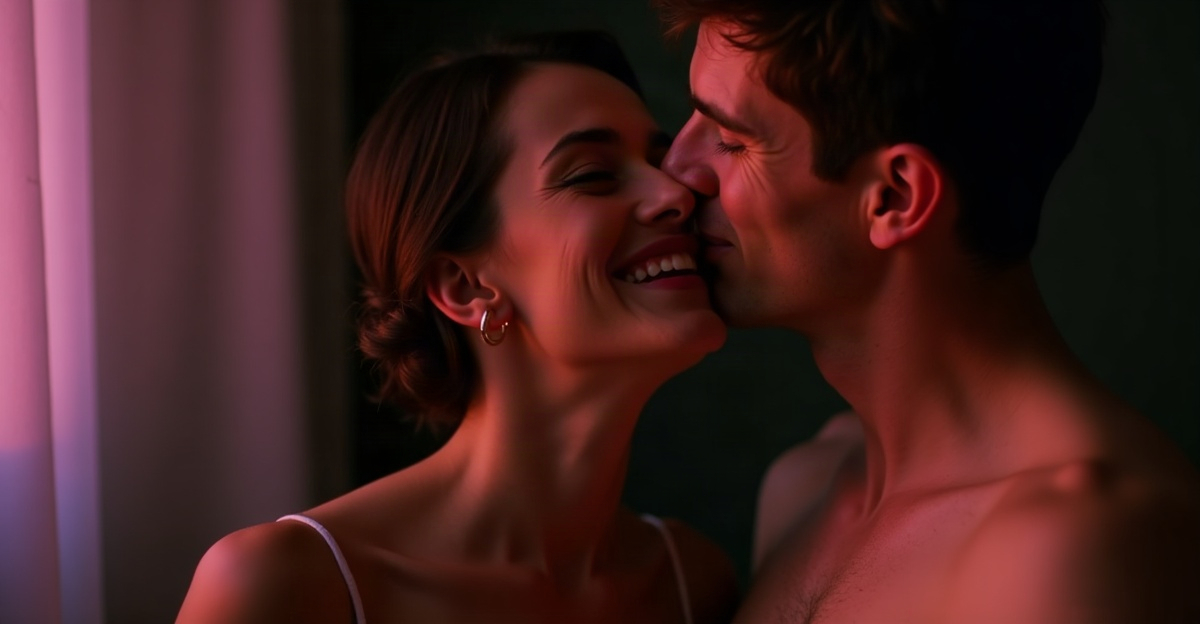
People no longer want to feel like they're in a race with their own orgasm. Reports say so, but you can also tell from the tone of conversations about sex and intimacy.
The sexual wellbeing of this year is not a list of techniques to apply. It's a different direction: less performance, more attention to what the body actually feels.
The recent Magic Wand report, built on a thousand participants, shows an interesting picture. Sexual habits are taking different paths based on age, orientation, and gender identity.
What drives sexual wellbeing in 2026
The definition is easy to understand in the body, less so on paper. Sexual wellbeing is the point where desire, health, and relationship stop fighting each other.
You don't need to be an expert to notice the change. The sexual wellbeing is no longer a glossy magazine luxury. It has become a daily necessity for those who want to feel good without giving up desire.
Sexual wellbeing is not a goal to reach by the end of the year. It's a way of inhabiting your body without judging it.
The new attention to breathing, emotions, and physical responses doesn't happen by chance. Those who have been working on it for years know it well: the body knows more than we admit.
Mindfulness and intimacy, pleasure as attention
Mindfulness enters sex without asking permission. It's not a technique to learn, it's a way of being in the moment: the breath, the heartbeat, the warmth of the skin.
The point is not to achieve a result. The point is not to detach from what is happening while it happens. Attention to sensations replaces performance anxiety.
The sensual wellbeing center describes it as an attention to breath, emotions, and physical responses. It sounds simple, yet it overturns decades of goal-oriented sex.
This changes the way we experience pleasure. And it also changes the way we talk about sexual agency: we stop asking ourselves if we're doing it right, and start feeling what we like.
It's not an absolute novelty. But it's quite something to see it at the center of 2026 trends.
Solo pleasure and relationships, the numbers of 2026
The Magic Wand report lines up a fact that many already sensed. Desire and frequency of solo sex compared to partnered sex depend on who you are, not on a universal rule.
Gen Z, queer people, and gender-expansive people explore more through solo pleasure. Cisgender heterosexual women, on the other hand, more often report experiences with a partner.
It's not a judgment. It's a picture of how identities and generations build intimacy differently. The modern eroticism has long stopped considering solo sex a fallback.
Solo pleasure is not a reduced version of sex. It's a school of body knowledge, without spectators or judges.
Those who experience pleasure alone are not running away from something. They are choosing a form of intimacy that for years was dismissed with embarrassment. The report, it must be said, doesn't surprise those who engage with these topics.
Prevention and consent, the thread that doesn't extinguish desire
Protection, even in 2026, is no longer just a condom to pull out at the right moment. The sexual health report says it with a new maturity: prevention is part of pleasure.
An adult approach to sexuality doesn't take away spontaneity. It integrates it. It culture of consent isn't a brake, it's the condition that lets desire express itself without fear.
Protection, even if it seems like a technical detail, has become a topic of conversation. Smart prevention doesn't interrupt the flow between two people; it makes it stronger.
When prevention becomes a shared habit, it stops being a switch to turn off. The remaining question is whether we'll treat it as part of the game or continue to see it as an imposition.
Sources and references
Sources:
- Sensual & Sexual Wellness Trends in 2026 – Sensual Wellness Center
- Sexual Health Trends to Watch in 2026 – Bite the Fruit
- Magic Wand Announces the Release of the 2026 Sexual Wellness Trends Report
- The Kinsey Institute
- AASECT – American Association of Sexuality Educators, Counselors and Therapists
Want to go from theory to practice?
Hundreds of performers are live right now, waiting for you on the videochat.
Join the videochat →