
The shibari is the Japanese art of rope bondage, born as a martial technique and turned into an erotic and aesthetic practice in the 20th century. In this guide you'll find what it is, the 4 basic ties that all beginners start from, and the safety rules that need to be learned before even the knots.
What is shibari
The word shibari in Japanese simply means “to tie”. Today it refers to a set of binding techniques used mainly in erotic contexts, but also as a form of performance art, photography and even relaxation. In the West the term is also often used kinbaku, which means “tight binding” and highlights the more erotic and relational aspect.
Compared to bondage Western, where the main focus is on immobilizing, in shibari it also matters how the rope draws the body: symmetry, tension, aesthetics. It doesn't necessarily restrain someone, sometimes it's about making them feel contained.
Historical origins
The roots of shibari lie in’hojōjutsu, the art of tying prisoners practiced in feudal Japan. The bindings followed precise rules and could indicate the rank or guilt of the bound person.
During the 20th century these techniques were taken up in theatrical, artistic and erotic contexts, giving rise to modern kinbaku. From there, through photography and communities BDSM, shibari arrived in Europe and the United States.
Before the knots: the safety rules
Rope seems harmless, but a wrong tie can crush a nerve or cut off circulation in a few minutes. These rules always apply, even for a five-minute scene.
Always keep safety scissors on hand, the round-tipped ones used by paramedics. If something goes wrong, cutting is faster than untying.
Always leave room for two fingers between the rope and the skin. A tie must contain, not squeeze.
Avoid the risk areas. Never rope around the neck. Pay attention to the inner upper arm above the elbow, where the radial nerve runs, the inside of the wrists and behind the knees.
Check the hands and feet often. Tingling, numbness, cold or bluish skin are signs to untie immediately, not to “hold on a little longer’.
Never leave a bound person alone, not even for a minute. And agree beforehand on a safe word or a gesture, especially if there's also a gag.
No self-taught suspensions. Lifting a person off the ground is an advanced technique that can only be learned in person, with an instructor.
Which rope to use
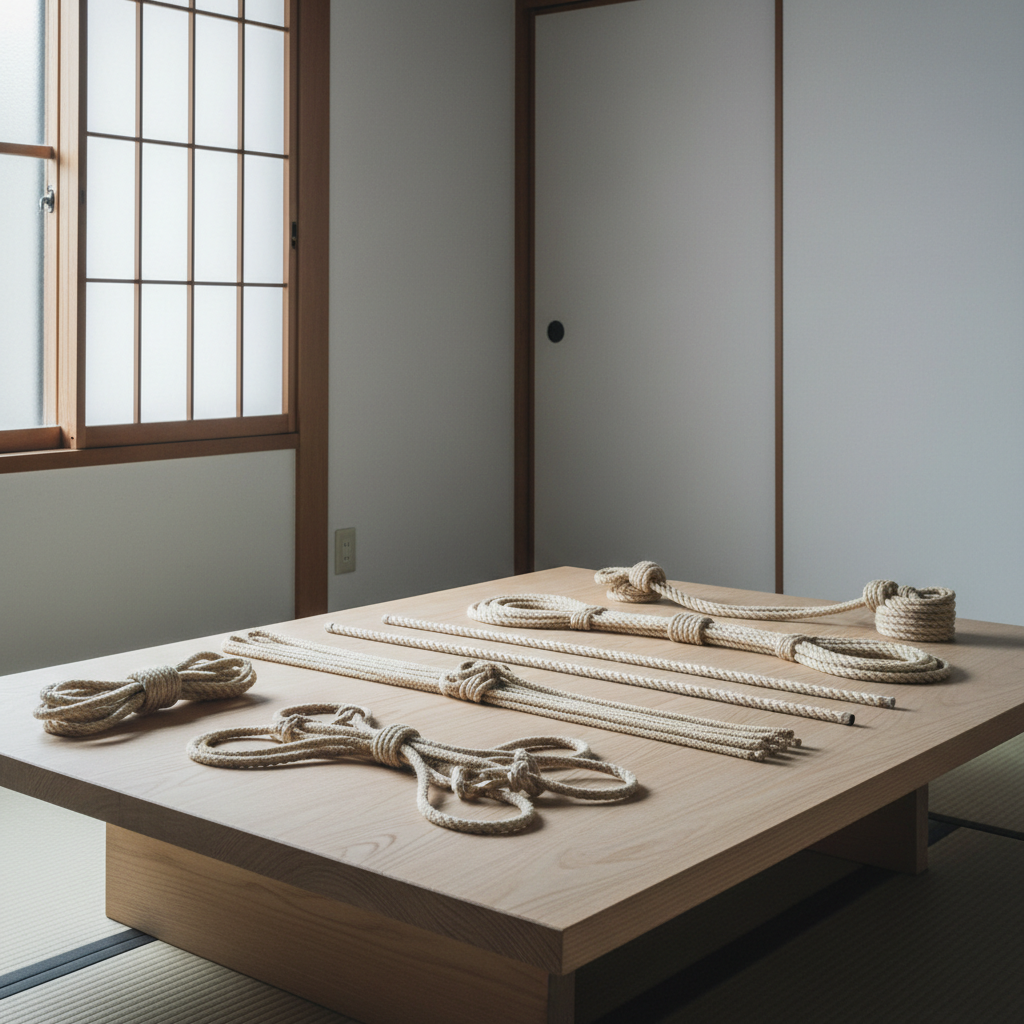
The traditional rope is made of jute o hemp, with a diameter of about 6 mm and a length of 7-8 meters. They are natural fibers, they create friction and hold knots well. To start, a rope made of soft cotton or synthetic material specifically for bondage: it is softer on the skin and easier to wash.
Avoid hardware-store ropes made of stiff nylon or plastic, which slip, burn the skin through friction, and tighten more than expected.
4 basic ties for beginners
Almost all shibari ties start with a rope folded in half. The point where it is folded is called bight, or loop, and the two free ends are always worked together.
1. Single column tie
It is the most important tie, because it answers every beginner's question: how do you tie a wrist without the knot tightening? It is used to tie a single limb, a wrist, or an ankle.
Fold the rope in half and wrap it twice around the wrist, with the wraps flat and side by side, without crossing them. Leave the space of two fingers. Then pass the bight under the wraps, bring it back over the long ends, and close with a half knot around the wraps themselves. The knot locks onto the rope wraps, not the wrist: that's why, even if the person tied pulls, the loop doesn't tighten.
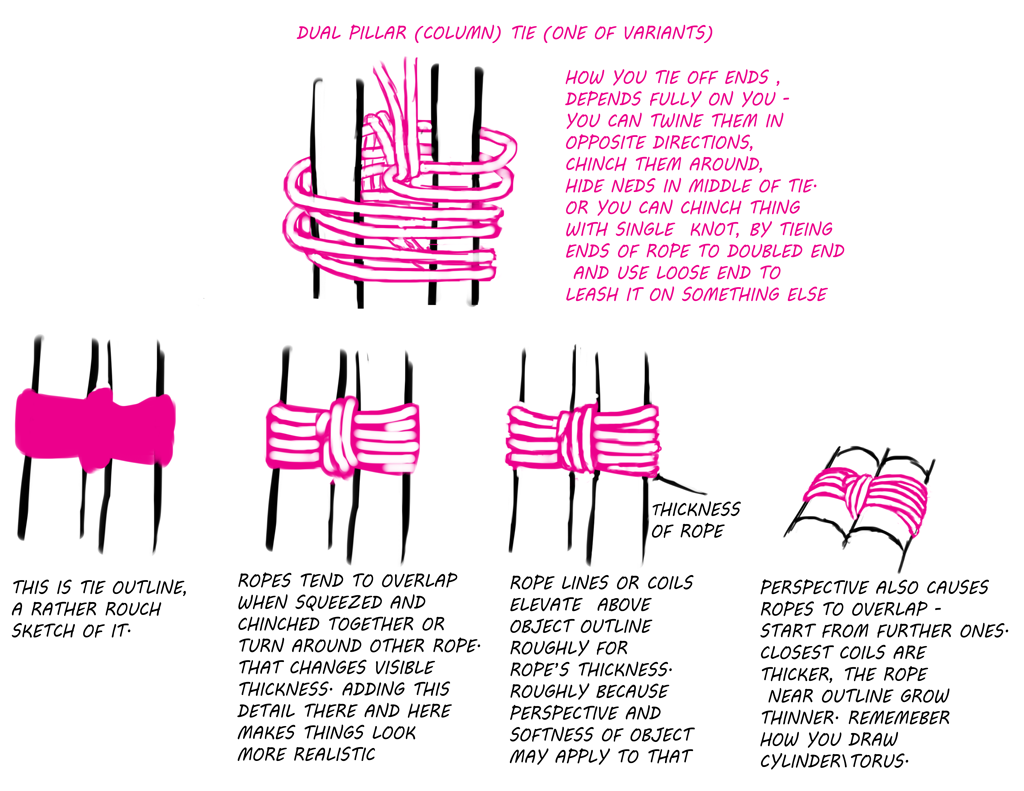
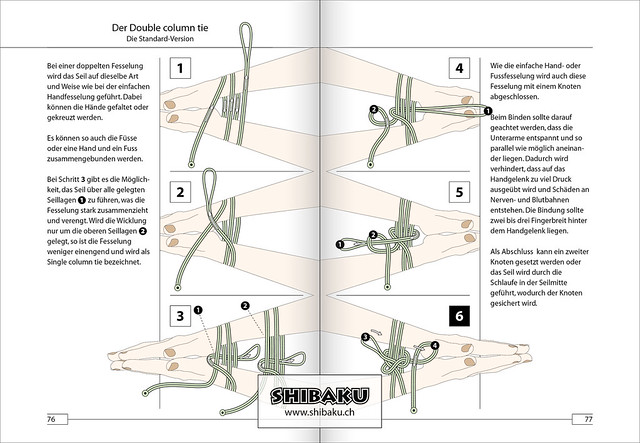
2. Double column tie
It is used to tie two limbs together, for example the two wrists or the two ankles. Wrap the rope around both wrists as for the single column. Then, before closing, pass the ends between the two wrists and wrap them twice around the wraps, “cinching” them in the center. This cinch keeps the wrists apart and prevents the tie from tightening when the person moves.
3. Lark’s head
It is the simplest knot of all and is used to attach the bight to something: another rope, a bed leg, a ring. Pass the bight around the object and then thread the ends through the bight itself. When you pull, the knot closes by itself. It comes undone in an instant, and that is precisely its virtue.
4. Half hitch to stop and close
The half hitch is the knot used to stop a tie or secure the rope to another length of rope. Pass the end around the already taut rope and then through the loop just formed. Two half hitches one after another form a stable closure, which however comes undone easily by pulling the free end.
With these four elements you can already build complete ties for hands, ankles, and hands behind the back. The advice is to practice them first on a pillow or on your own leg, until they come out clean without thinking about it.
 |
 |
Shibari and couple dynamics
In a couple, shibari is often more a matter of trust than knots. The person tying takes responsibility for the other person's body. The person being tied surrenders, and many people report a state of deep calm, almost meditative, when the rope wraps around them.
This is why it fits easily into the dynamics of dominance and submission, but it can also remain a slow and sensual game, to pair with the sensory play or with the tease and denial. After a session, a few minutes of aftercare helps you return to calm.
Frequently asked questions
What’s the difference between shibari and bondage?
Bondage is any practice of immobilization, whether with ropes, handcuffs, or something else. Shibari is a specific style of rope tying, Japanese in origin, with attention to aesthetics as well.
How much rope do you need to start?
Two or three ropes of 7–8 meters are enough for almost every basic tie.
How do you tie a bondage knot that doesn’t tighten?
With a single-column tie: the knot tightens around the wraps of rope, not around the limb, so the loop stays the same size even if the person tied pulls on it.
Can you learn on your own?
Basic ties, yes, with patience and caution. For chest ties and especially for suspensions, a course or an experienced teacher is advisable.
Sources and references
- Wikipedia, Shibari
- Wikipedia, Kinbaku
- Wikipedia, Hojōjutsu
- Wikipedia, Rope bondage
spiderBlog Editorial Team
Want to go from theory to practice?
Hundreds of performers are live right now, waiting for you on the videochat.
Join the videochat →