
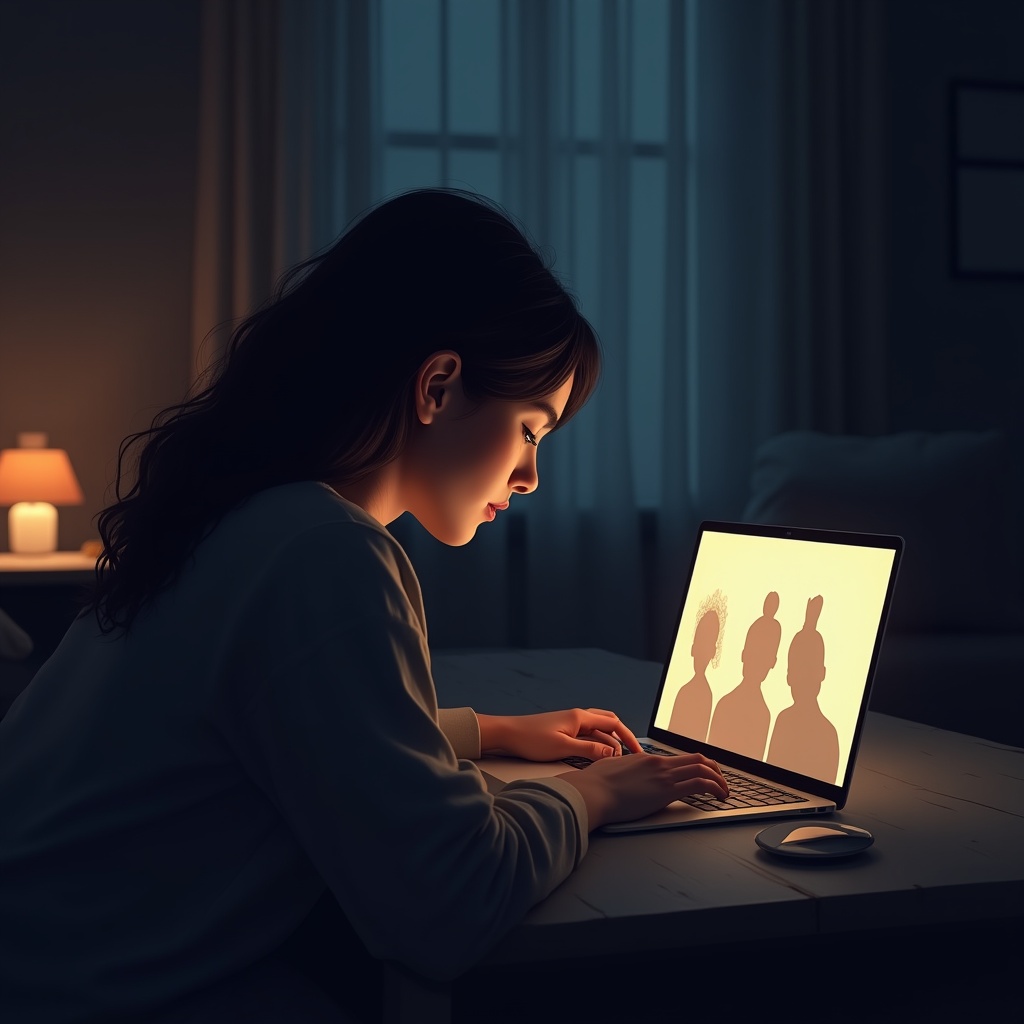
In recent years, adult videochat has evolved from a purely playful and transgressive dimension to an object of study, sociological analysis, and psychological reflection. Various universities, researchers, and observers of the digital world have begun asking questions about what this phenomenon really represents and how it is changing the way people experience it and relate to it.
This article explores the phenomenon of erotic videochats viewed and analyzed from a different perspective than usual. The audience of users has become broader, better informed and more aware, comparing interactive adult videochats with other sites that offer videos, photos, and services based on static content, first and foremost OnlyFans.
Adult videochat as a social phenomenon
Several studies in the field of digital intimacy highlight how synchronous interactions, that is, those happening in real time, produce psychological effects that are profoundly different from the consumption of recorded content.
Adult videochat introduces three key elements:
- reciprocity (the people involved can communicate and interact in real time)
- unpredictability (the interaction is not scripted)
- emotional engagement (attention, response, satisfaction)
These factors make the experience closer to a mediated relationship than to the passive consumption of content.
Erotic videochat vs on-demand content
From a psychological and behavioral standpoint, the difference between adult videochat and platforms like OnlyFans is substantial.
On-demand content:
- is asynchronous
- does not involve an immediate response
- involves individual and repetitive consumption of content
Videochat, on the other hand:
- requires active presence
- creates a relational space
- introduces dynamics of exchange and negotiation
According to some research on online user behavior, real-time interaction produces a heightened perception of authentic sensations, reducing the sense of isolation caused by the consumption of static on-demand content.
Psychological connections: attention, validation, and agency
The psychology of digital interaction emphasizes how videochat activates mechanisms linked to:
- shared attention
- mutual recognition
- sense of agency (*)
Unlike other media, the user is not a passive spectator, but an integral part of the experience. This aspect is central to understanding why many users describe videochat as more fulfilling and less alienating.
(*) not to passively undergo the experience, but to be able to actively participate in it.
Sexuality, disability, and digital resources
A particularly relevant area of study concerns accessibility.
For people with motor or sensory disabilities, adult videochat today represents:
- a safe space
- a form of exploring one's own sexuality
- an alternative to physical and social barriers
The academic literature on’online sexual assistance highlights how digital tools of this kind can foster autonomy, expression, and psychological well-being, if used consciously and respectfully.
Digital intimacy and the future of mediated relationships
Scholars increasingly speak of mediated intimacy, a concept that goes beyond the real/virtual dichotomy.
Adult videochat is situated within this hybrid space:
- it does not replace traditional emotional relationships
- it is not reduced to mere visual-sensory entertainment
- it becomes a different relational experience, situated in a specific niche
Understanding this phenomenon means moving beyond prejudices to observe how the world of digital eroticism is redefining boundaries, roles, and human experiences.
Conclusion
Adult videochat is no longer just an entertainment product, but a true and proper complex phenomenon, a mix of psychology, sociology, technology, and inclusion.
Addressing it with an informed and critical awareness lets us not only understand its evolution but also use it in a conscious, respectful, fun, and fulfilling way.
Sources and key studies
To avoid non-persistent links or links subject to change (common on academic websites), the following references point to stable official pages via publishers, DOI, or Google Scholar.
- Sherry Turkle (2011), Alone Together: Why We Expect More from Technology and Less from Each Other, MIT Press.
Book page: https://scholar.google.com/scholar?q=Sherry+Turkle+Alone+Together - Joseph B. Walther (1996), Computer-Mediated Communication: Impersonal, Interpersonal, and Hyperpersonal Interaction, Journal of Communication.
https://doi.org/10.1111/j.1460-2466.1996.tb01462.x - Katelyn Y. A. McKenna & John A. Bargh (2000), Plan 9 from Cyberspace, American Psychologist.
https://scholar.google.com/scholar?q=McKenna+Bargh+Plan+9+from+Cyberspace - danah boyd (2014), It’s Complicated: The Social Lives of Networked Teens.
https://scholar.google.com/scholar?q=danah+boyd+It%27s+Complicated - Alex Barak et al. (2008), Sexuality and the Internet, CyberPsychology & Behavior.
https://scholar.google.com/scholar?q=Alex+Barak+sexuality+internet - Sexuality and disability – scientific reviews on intimacy, digital media, and inclusion.
https://scholar.google.com/scholar?q=sexuality+disability+online+intimacy
These references belong to established lines of research and are commonly used in the literature on digital intimacy, computer-mediated communication, and inclusion. They can foster connection, agency, and inclusion if experienced mindfully.
spiderBlog Editorial Team
Want to go from theory to practice?
Hundreds of performers are live right now, waiting for you on the videochat.
Join the videochat →