
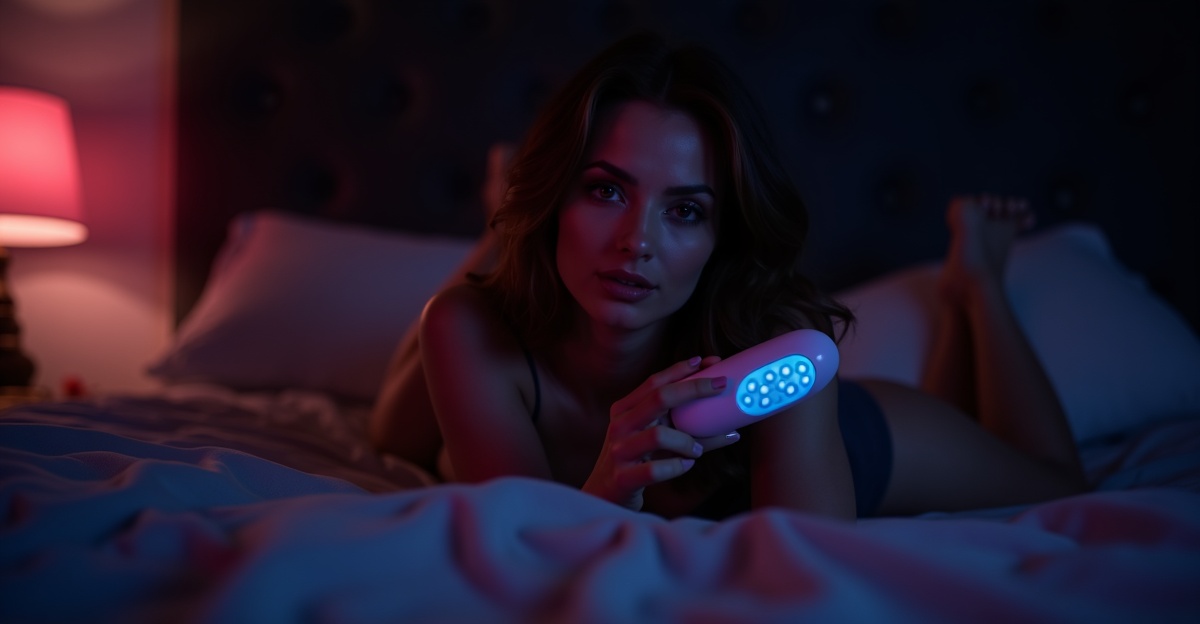
It's no longer science fiction. Vibrators that understand your mood, platforms that orchestrate the experience in real time, and devices that learn your reactions. 2026 marks a turning point for sex tech, and anyone who has followed the sector for years can see it clearly: we're not talking about more powerful toys, but a conceptual leap. Artificial intelligence is entering the bedroom with a concrete promise—to adapt to the person using the device, not the other way around.
Market data confirms the trend. According to The Business Research Company report, the sex tech sector is experiencing growth fueled by increasing funding and a public perception that is normalizing. More and more people see these devices not as taboo objects, but as tools for sexual wellbeing. And that's a substantial difference.
The real breakthrough, though, is something else. Companies are shifting their focus from fine stimulation for its own sake to control of the experience. These are devices with sensors capable of detecting stress levels, heart rate, and even arousal patterns. Learning machines, in short.
Devices That Read You From Within
One of the most interesting innovations involves devices with emotional sensors. They work like this: while you use the toy, the AI analyzes your physiological parameters and adjusts intensity, rhythm, and patterns in real time. You don't have to touch anything. The device changes the stimulation on its own based on how your body responds.
Those who have tried the first prototypes describe an almost surreal experience. The toy doesn't follow a preset program; it reacts to you. If you're more tense, it slows down. If arousal rises, it speeds up. It's like having a partner who knows you very well, but without the human component of distraction or insecurity.
Sure, the technology isn't perfect. Detecting mood with absolute precision remains a challenge, and some people turn up their noses at the idea of an algorithm deciding the rhythm of their own pleasure. But the potential is enormous, especially for those who have trouble relaxing or communicating their preferences.
It's not that strange, after all. We already do it with music, thermostats, fitness apps. Why not do it with sex too?
Content-Led Orchestration: Porn Meets the Toy
Another trend that's gaining traction is what industry insiders call content-led orchestration. In practice, toys sync with audio and video content in real time. Not just adult films, but also sessions guided by real or AI-generated voices that lead the user through a progressive experience.
This is where the world of’Audio Eroticism and JOI. Imagine a device that follows the rhythm of a voice giving you instructions, or that intensifies when the audio scenario reaches its climax. It's no longer about watching passively, but about being guided through a multisensory experience.
Industry companies are collaborating with content creators to develop libraries of sessions designed specifically to work with these toys. The result is a hybrid of entertainment and wellness that eliminates much of the frustration of using a “mute” toy.
The difference compared to the past? Personalization. Each session can be tailored to individual preferences, and the devices learn from mistakes. If a pattern doesn't work, the system records it and doesn't try it again.
Health, Not Just Pleasure
One of the most discussed aspects of sex tech's new direction is the shift toward a health-centered perspective. Devices are no longer just toys, but tools for monitoring sexual and reproductive health. Some models measure pelvic blood flow, others record the frequency of contractions during orgasm.
This integration of pleasure and health data is changing the way people perceive masturbation and toy use. It's no longer just a moment of release; it can become an opportunity to get to know your own body better. The data collected can be shared with doctors or specialists, paving the way for more preventive and personalized sexual medicine.
But be careful: with data comes responsibility. Privacy is the Achilles' heel of this industry. Connected devices collect extremely sensitive information, and not all companies have adequate security standards. Choosing products with end-to-end encryption and transparent policies isn't optional—it's necessary.
Consent doesn't end when you turn on the device. Knowing exactly what data is collected, where it goes, and who can access it is an integral part of mindful sex tech use. This Consent Culture also applies to technology, perhaps even more so.
The Future Is Already Here (But You Need to Use Your Head)
The innovations of 2026 aren't distant prototypes. At least three companies have already announced the commercial launch of devices with emotional sensors by the end of the year. Prices, for now, are high: we're talking 300-500 euros for the most advanced models. But as with any technology, the cost will fall as it becomes more widespread.
The real question is another: are we ready to let an algorithm manage such an intimate part of our lives? For many, the answer is yes, especially for those who have had frustrating experiences with inattentive partners or toys that don't work as promised. For others, the idea remains unsettling.
Maybe the solution isn't to choose between human and artificial, but to learn to use them together. Technology doesn't replace emotional connection, but it can help those who struggle to reach pleasure on their own. And there's no shame in admitting it.
Anyone working in sex education sees it every day: the problem isn't a lack of desire, but the difficulty of translating it into a satisfying experience. If a device can act as a bridge, all the better.
2026 will be the year sex tech stops being a curiosity and becomes a normal tool. At least for those brave enough to try it.
Sources and references
- Sex Tech Innovations to Watch in 2026 – Bathmate Blog
- Sex Tech & Pleasure Trends 2026: How Intimacy Is Changing – Magic Motion
- Sextech Market Size, Share, Trends, Growth Report 2026
- The Kinsey Institute – Research on sexuality and technology
Want to go from theory to practice?
Hundreds of performers are live right now, waiting for you on the videochat.
Join the videochat →