
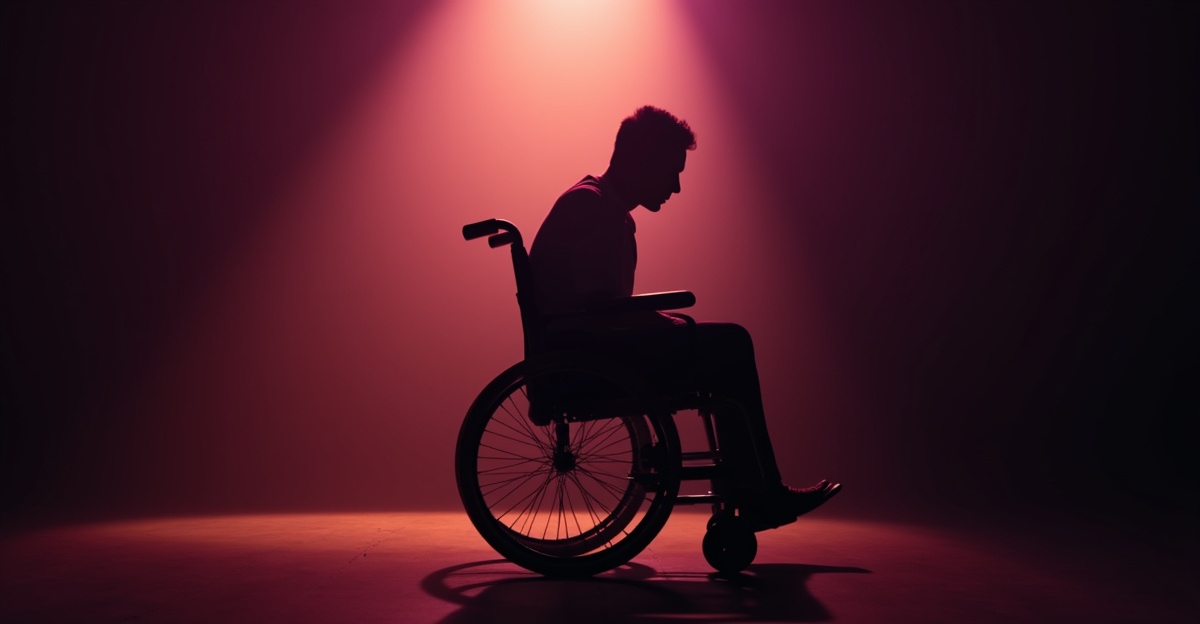
The sexuality of people with disabilities is one of the most silenced topics in the public conversation about sexuality. Not because it doesn't exist, but because the normative body remains the implicit point of reference in most erotic and sexual culture.
The problem of representation
People with physical, sensory, or cognitive disabilities have a sex life. This seems like an obvious statement, yet it is systematically contradicted by the almost total absence of representation in the media, in the adult industry, and in public conversations about sexuality.
When representation does exist, it is often built for an outside audience: disability as an exotic element or as an object of curiosity, not as a normal part of the sexual experience of those who live it.
Sexual assistance and intermediation
In some European countries, such as Denmark, the Netherlands, and Switzerland, there is a professional role known as a sexual assistant: a person trained to support the sex lives of people with disabilities who cannot find partners independently. In Italy, this role is not legally recognized, and public debate on the subject is almost nonexistent.
Digital platforms as a point of access
For some people with disabilities, cam platforms and digital adult content represent one of the few practical points of access to a sexual or erotic experience. It is not an ideal solution to a structural problem, but it is a reality worth acknowledging.
To learn more about the topic of digital intimacy, read our article on digital intimacy.
Want to go from theory to practice?
Hundreds of performers are live right now, waiting for you on the videochat.
Join the videochat →